
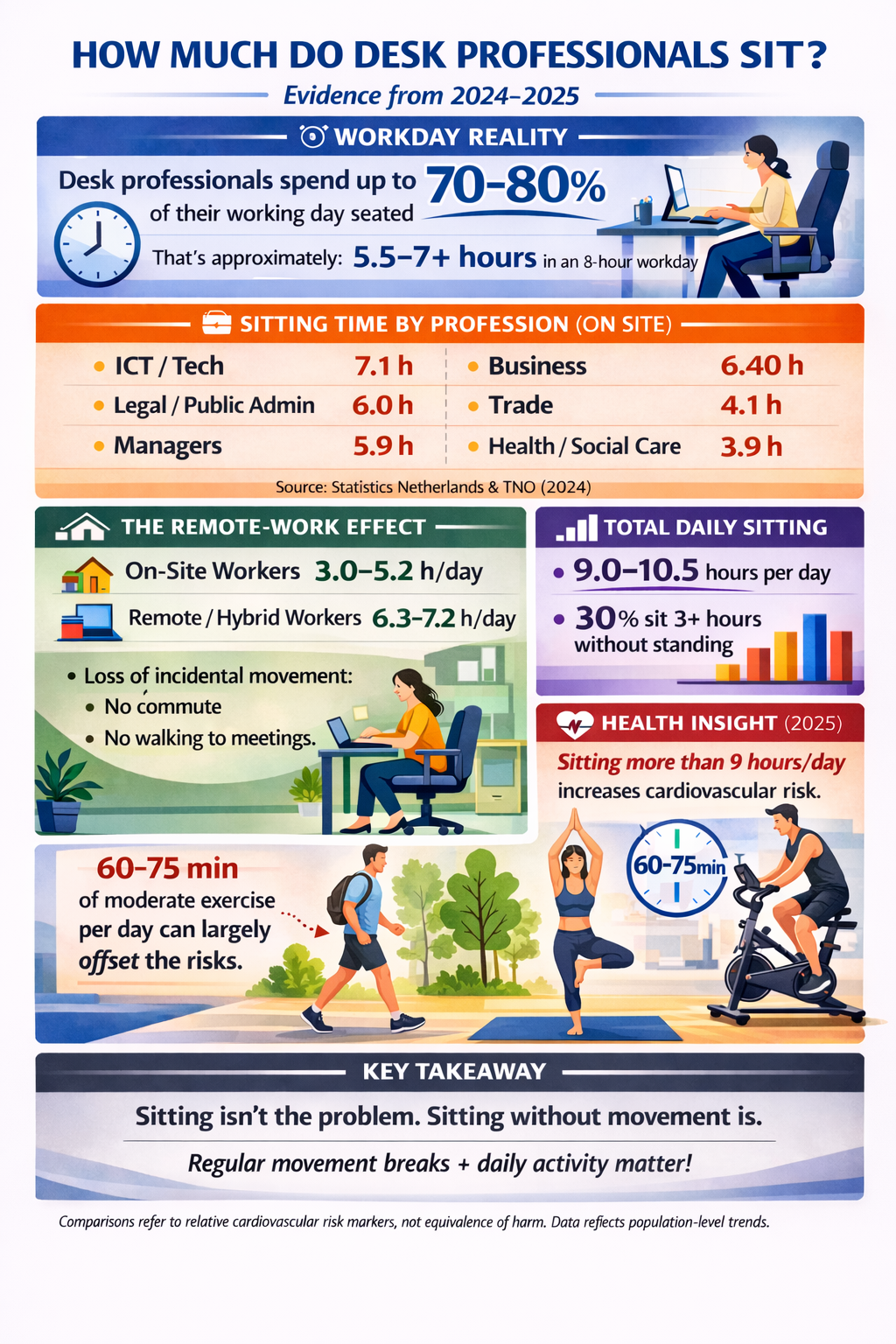
To offer an evidence-based approach in my new course, I have been researching sedentary lifestyle and its impact on our health. I became curious to find out how much time we actually spend at a desk. As I like numbers, I decided to calculate the answer using a typical UK working pattern:
• 25 days annual leave
• 8 bank holidays
• around 4 short sick days per year
• 7.5-hour workdays
• across a 40-year career
Most people work approximately 223 days per year, which is the equivalent of:
• 2,787 days
• 399 weeks
• 7.6 years of seated working time
From a data perspective, it’s striking how something that feels so ordinary — just sitting at a desk — becomes such a dominant physical experience when viewed cumulatively.
What’s interesting is that the body rarely reacts all at once.The early changes are subtle. A head that rests slightly further forward by the end of the day. Shoulders that round a little after hours at a screen. Occasional neck tension. A sense of tightness across the chest. Nothing dramatic. Nothing alarming. And that’s why most people dismiss it as “just part of work” or “getting older”.
But research consistently shows that this early phase is when the body is most responsive to change. Small adjustments as regular movement breaks, movement variety and conscious breathing can have a measurable impact when repeated over time.
This way of thinking is what shaped Evidence-Based Yoga for Desk Professionals: helping desk-based people move and breathe better within the reality of modern work.
If you’d like to explore how this applies to your own working day, you can still join the founder course which includes special, on-off benefits:
Evidence-Based Yoga for Desk Professionals
Please contact me directly if you have any unanswered questions.
I look forward to welcoming you and supporting you on this journey.
Leave A Comment
You must be logged in to post a comment.